Saturday, 15 November 2008

Okinawan -> Japanese -> Korean forms

Some time ago I was researching the origin of the matial art of Tang soo do, particularly the forms we practice (or Hyung) and I came across an interesting thing while training with a local karate club. The teacher is an impressive martial artist called Malcolm Howlett who was trained in (I believe) Goju Ryu and is very knowledgable with an instantly easy rapport. The revelation I made when training with Okinawan and Japanese stylists was that the forms I had taken great care to learn have a strong heritage in the Okinawan forms! I could happily follow a kata class with these guys, even understanding the names of the forms. I believe also that the Korean hyung have vestiges of an older style, that is to say the Japanese kata seem to have evolved in a different way and often the instructor would remark that I would perform an 'older' variant. 

The lineage of Korean karate is often disputed: certain exponents believe it has a pure lineage back to the 3 kingdoms era with no Japanese influence and mostly some Northern Chinese teachings (Northern Chinese kung fu or Mountain style is typified by higher stances, high and jumping kicks). what cannot be disputed though is the similarity between Tang Soo Do's hyung and the Japanese and Okinawan style katas.

Okinawan karate was influenced by Chinese traders who practiced Chuan Fa (chuan meaning 'fist'). The Okinawans developed this into a hard style which they referred to as 'Te' (or fist).  Kara te (originally meaning Chinese hand) was then taken to Korea during the early twentieth century occupation. Note the similarity between Kara te and Tang Soo (China Hand). Of course the nomenlature does not in itself make an argument in itself and it is true that Korean karate is typified by spectacular jumping and spinning kicks with high energy but I believe the structure of the Tang Soo do forms is irrefutably linked to a Japanese and Okinawan heritage.


Okinawan kata Japanese kata Korean Hyung
Pinan Heian Pyong Ahn
Naihanchi Tekki Naihanchi
Passai Bassai Bassai
Wanshu

Enpi

 
Rohan Meikyo Rohai
Chinto Gankaku Jindo
Kusanku Kanku Kong Sang Koon
Useishi Gojushiho  
Seisan Hangetsu  
  Jitte Sip Soo

I'll get round to making this look prettier soon!

Friday, 14 November 2008

The new gladiators

Interesting clip on Youtube with some great Benny The Jet footage. This guy moves really fluidly and I love to watch this sort of sparring. It's high energy, focused and hard.


This next video shows him knocking down Koshikawa. Check out Benny's duck at 15 seconds. Takes a lot of balls to do this and much confidence. Great counter blow to the body as he rises up from this.


Monday, 3 November 2008

Book reviews


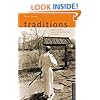
Traditions: Essays on the Japanese Martial Arts and Ways (Tuttle Martial Arts),
I'm a big fan of the Dave Lowry series of books which give helpful insights into the bridge between martial arts and our daily lives.

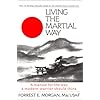
Living the Martial Way : A Manual for the Way a Modern Warrior Should Think,
Written by a committed and dedicated martial artist who's been around the block and come back to his house with a load of bruises, experience and a different take on how to progress in the martial ways.

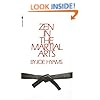
Zen in the Martial Arts, 
Good short read about the contemplative side to the martial ways.

Moving Toward Stillness: Lessons in Daily Life from the Martial Ways of Japan,
Fantastic insights into how Dave Lowry leads his life through martial ways. This is not a technical tutoring book but what you learn from this anthology of short essays can help your attitude towards your martial training as well as in your daily life.


Grading

Well the grading went quite well, but not without a few pre-exam nerves. As I didn't have a partner I asked others to help me revise some problem techniques but as they were busy cramming themselves they weren't too chatty. Understanably so.

Upon registering I was told I'd work in a group of 3 with 2 Cardiff Kenshi who were (naturally) charming. These guys helped me out throughout the grading. I needed it as the acoustics were terrible in the hall- lot's of kiais alongwith shouted instruction meant I had real trouble making out what was being said. At one point I interpreted kiritz ('attention' or 'line up') as Chris, so I stood forward only to be looked blankly at and told, again kiritz.... Doh!

Gradings are a great way to pressure test techniques. When you're nervous and have lots of other stimuli to contend with it requires a lot of focus to stay on task. Occasionally I found it hard. Disecting how it went with one of my partners, Beth, she made a salient point: focus on the positive and when a mistake is made, leave it behind- move on.

Important points brought out at the end of the exam were that:  there must be improvement, from one grading to the next. Moving on and focusing on improvement with constant learning is essential. 

Needless to say I came away from this charged for more training and more learning....


Saturday, 20 September 2008

A pain in the back

Following on from my pullled back muscle article (which is doing nicely now thanks) I thought I'd add this snippet I picked up: it's the straighten up campaign!

Sunday, 31 August 2008

Torn muscles and tempers

"BLOODY OUCH!", I said the other day during a Tang Soo Do session. Early on in the warm-up I stooped over and suddenly I felt a "BANG" in my lower back over to one side. After the initial shock of the pain I realised it wasn't going to magically go away. I was most annoyed. Mostly because I didn't warm myself up properly as I should and as I like to before the 'official' warm-up started. This pre-lesson warm-up gives me the time to stretch in a personal way: I know my body best ans know where I need to put in a certain amount of attention, stretch more here, give more attention to the feet and ankles (especially in winter!). But that day I was annoyed at myself, mostly as I wouldn't be able to continue the lesson.

But I did. Reckless I know but I was working on the assumption that keeping it moving (gently) wasn't going to do it as much harm as stopping dead. I have since learned that putting an ice pack on a muscle tear is probably the best thing just afterwards. I came home had a bath and popped some ibuprofen.


I checked some details about muscle repair this evening and from what I can tell (although I'm no expert) as a muscle tear heals it will form scar tissue which is less flexible generally. During this healing period it is therefore an idea to gently stretch out the muscle to try and maintain some of the previous flexibility and build this in to the newly healing part of the muscle. Of course I'm not doing it if it hurts but an interesting point as I think I'd have just left well alone till it was completely healed otherwise. This is a great article!


"Gradually training muscles specifically in eccentric contractions is helpful in reducing muscle strain injuries." Not sure what this means.... :-)

More DOMA blog articles about injuries in the martial arts.


Tuesday, 22 July 2008

Step forward and achieve your goals

Nick Thorpe meets a Hungarian judoka who has returned to competition after a string of serious injuries - and a family tragedy.

http://news.bbc.co.uk/1/hi/world/europe/7511259.stm